
Program Name: The Club for Slow Running
The Club for Slow Running
The 70-90 Club
Slow down and keep moving. The Club for Slow Running combines comfortable-paced running, walking, and recovery to build endurance without the pressure of speed or competition.
Price: $15/class or $45/month
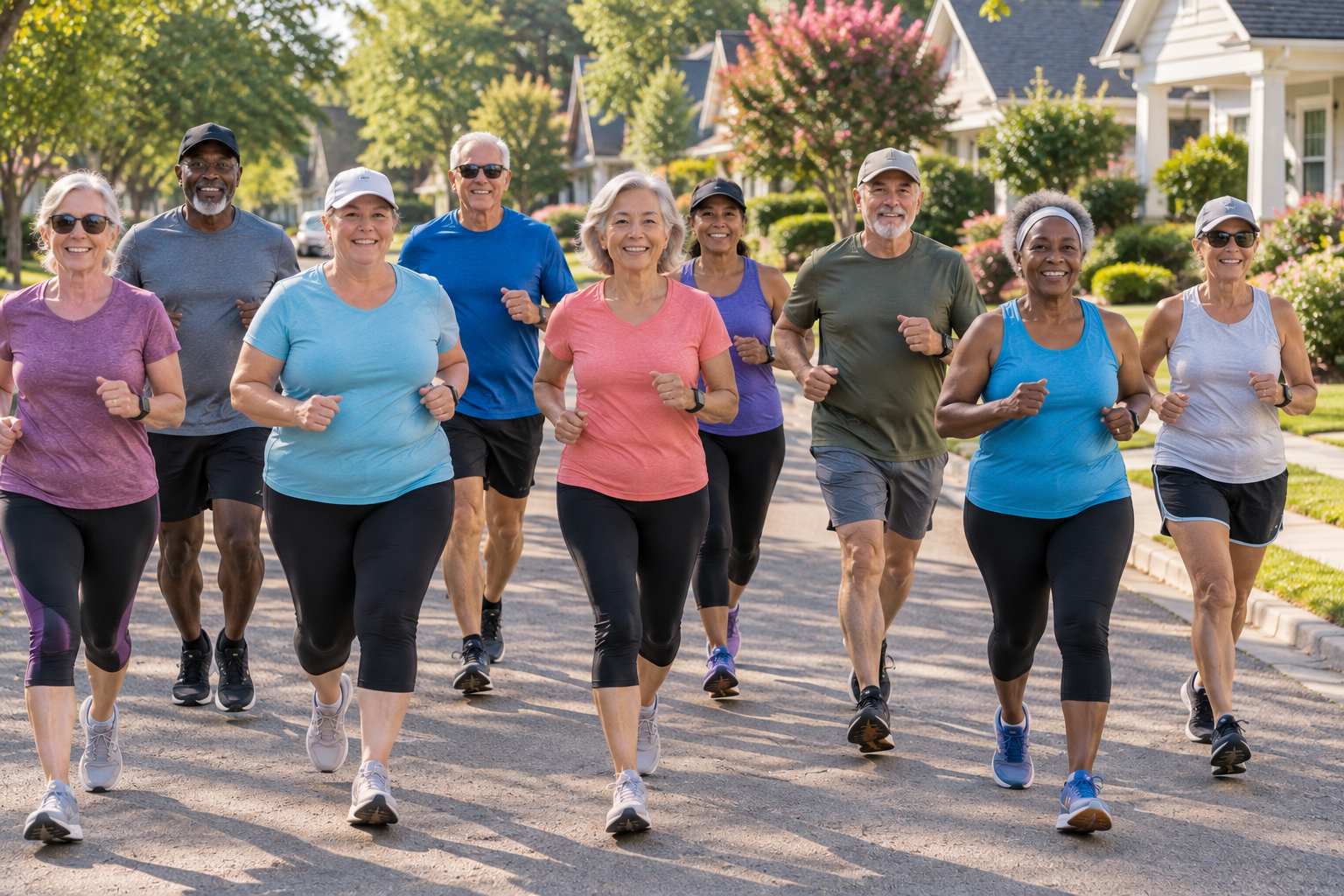
The Club for Slow Running
The Club for Slow Running is a guided group fitness class built around the practice of running at a deliberately slow, controlled pace. Unlike conventional running workouts that often emphasize distance, speed, pace times, intervals, or competition, this class removes speed from the equation and makes sustainable movement the primary objective. Participants learn how to slow their running down, regulate their effort, maintain a comfortable rhythm, and gradually build the ability to stay active for longer periods.
Who Is the Class For?
The class is appropriate for adults who want to incorporate running into their fitness routine without making high-speed running the focus. It can accommodate people with different levels of running experience, including participants who currently walk for exercise, people returning to running after an extended break, and recreational runners who want a lower-intensity workout. Participants are encouraged to work at an appropriate individual pace rather than attempting to match the speed of another person in the group.
Getting Started
Each class begins with a progressive warm-up that prepares the body for running. Participants begin walking before gradually increasing their movement intensity and preparing the ankles, calves, hips, legs, and core for the workout. Basic running mechanics are introduced or reviewed, including upright posture, relaxed movement, foot placement, arm movement, breathing, and pace control. The goal is to establish an efficient and repeatable movement pattern before the running portion begins.
The Slow Running Workout
The primary workout consists of slow-running segments performed at a comfortable, sustainable effort. Walking periods can be incorporated between running segments or whenever an individual needs additional recovery. Rather than prescribing one speed for everyone, the class emphasizes perceived effort and the ability to maintain control throughout the workout. Participants should be able to regulate their pace, maintain their breathing, and continue moving without turning the session into a race.
Learning to Control Your Pace
Instruction throughout the class focuses on learning what slow running actually feels like. Many people naturally accelerate when they begin running, which can quickly increase fatigue and make running feel unnecessarily difficult. The Club for Slow Running teaches participants to resist that instinct and establish a pace that can be maintained. Over time, this approach can provide a practical way to develop cardiovascular endurance, running tolerance, coordination, and overall conditioning while keeping workout intensity manageable.
Running Together
The group format also creates a consistent structure for people who prefer exercising with others. Participants run together while maintaining their own appropriate pace, allowing the class to function as both a structured workout and a shared physical activity. The emphasis is on participation rather than performance. There is no requirement to be the fastest runner, complete a specific distance, or maintain a predetermined pace.
Cool-Down
The class concludes with a gradual reduction in activity, followed by walking and recovery. Participants are given time to bring their breathing and heart rate down before finishing the session.
The Goal
The Club for Slow Running provides a straightforward alternative to traditional running programs: slow the pace, control the effort, keep moving, and build endurance through consistency. It is a running class for people who want the experience of running without making speed the measure of success.
What's Included:
- Guided slow-running workout
- Walking warm-up and preparation
- Slow-running intervals
- Walking and recovery periods
- Running form instruction
- Pace and effort guidance
- Breathing and rhythm instruction
- Lower-body movement preparation
- Cardiovascular endurance training
- Cool-down and recovery
- Group-based instruction and motivation
Skills
Format: Ongoing